
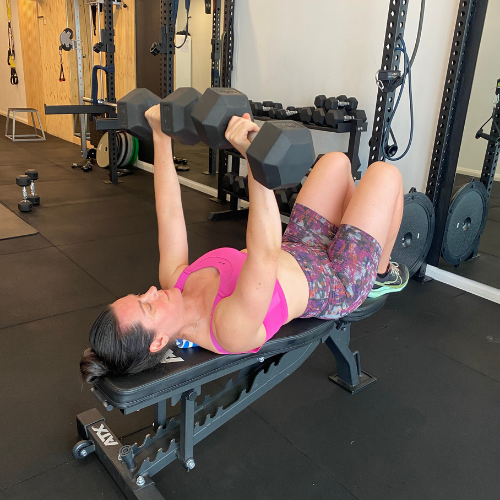
Osteopenia isn’t new to me. I’ve been training women in Maroubra for over 20 years, and in that time I’d say at least 5% of my clients have had it — sometimes they already know from a GP, sometimes we find out because I ask them to get a DEXA scan before we start. Bone density starts declining for most people from their mid-30s onward, and it accelerates after menopause for women. It’s not something you feel happening — there’s no ache that tells you your bones are thinning. And honestly, most of the women I train aren’t thinking about it at all. They’re too busy working and running around after teenage kids to be thinking about their own bones — it’s just not on the radar until a GP brings it up, or something forces the conversation. Usually the first real sign is a fracture from a fall that shouldn’t have caused one. The good news is weight training is one of the few things actually proven to slow that decline — and I’ve watched it happen with my own clients, not just read about it.
Understanding Osteopenia
Osteopenia is lower-than-normal bone density that hasn’t yet reached osteoporosis — a precursor stage, not a diagnosis to panic over, but a signal to act. It’s picked up via a DEXA scan, and I’d genuinely recommend asking your GP for one if you’re over 50, post-menopausal, or have a family history of osteoporosis. If you’ve already been told you have osteopenia or osteoporosis, that doesn’t rule out weight training — it makes it more important, though it does mean starting under proper guidance rather than freelancing it.
Benefits of Weight Training for Osteopenia
Bone is living tissue — it responds to load the same way muscle does. When you put mechanical stress through a bone (via lifting, not walking or cycling), it triggers bone remodelling: your body lays down new bone tissue to handle the load next time. Cardio has its place for heart health, but it doesn’t provide enough mechanical loading to meaningfully drive this process the way weight training does.
I’ve seen this play out directly. One client of mine, a woman in her 50s, was told by her GP to get a DEXA scan — that’s how she found out she had osteopenia. She started training with me twice a week, and when she went back for a follow-up scan a year later, her bone density marker had genuinely improved. That’s not a guess or a marketing line — it’s what the scan showed, and it’s the reason I take this part of programming as seriously as I do.
Alongside the direct effect on bone density, resistance training also builds the muscle strength and balance that prevent the falls that turn low bone density into a fracture in the first place. That’s really the full case for it: stronger bones, and a lower chance of the fall that tests them.
Designing Your Weight Training Program
This is the part most guides skip — here’s what an actual bone-loading program looks like, and it’s the same structure I use with clients in the studio.
Frequency: 2–3 sessions per week, with at least one rest day between sessions that hit the same muscle groups. Consistency matters more than intensity when you’re starting out.
The core movements. I build a bone-density program around compound, weight-bearing lifts — these load the hips and spine, which are the two sites most at risk from osteoporosis:
- Squats (bodyweight, goblet, or barbell depending on experience) — loads the hips and spine directly.
- Deadlifts (trap bar, dumbbell, or barbell) — one of the most effective lifts for hip and spine bone density, and the one I make sure to teach properly before adding real load.
- Farmer’s carries — simply walking while holding a heavy weight in each hand. Deceptively effective for grip, spine stability, and bone loading, and one of the safest ways to add load early on.
- Overhead press — loads the wrists, shoulders, and spine, three more common fracture sites.
Progressive overload, in plain terms: your bones only keep adapting if the load keeps increasing over time. That doesn’t mean adding weight every session — it means every few weeks, once a weight starts feeling comfortable for a full set, adding a small amount (2.5–5kg on a lift, or a few more reps) so your body keeps being asked to adapt. Jumping the weight up too fast is the main way people get hurt starting a program like this — slow, steady increases are the whole point, and it’s the part I watch most closely with new clients.
Sets and reps: 2–3 sets of 6–10 reps per exercise is a solid starting range for bone loading — heavy enough to create real mechanical stress, light enough to keep form solid while you’re still learning the movements.
Before you start: if you have a diagnosed bone density condition, get clearance from your GP first, and get a DEXA scan if you haven’t had one — it gives me a real baseline to work from and track your progress against, rather than guessing.
How I structure this at The Fitness Space: every new client goes through a movement assessment before I load anything — I’m not handing you this list and leaving you to it. From there I build your frequency and load progression around your actual starting point, whether that’s your first time ever lifting a weight or you’re returning after years away. My personal training in Maroubra is built exactly around this kind of staged, supervised progression, not a generic program.
Conclusion
Bone health isn’t something to think about later — the earlier you start loading your bones, the more density you protect before natural decline sets in. And the training itself is nowhere near as intimidating as it sounds once you’re actually shown the movements. I’ve watched enough clients go from nervous about their first DEXA result to genuinely proud of their next one to know consistency and the right plan beat intensity every time.
I’m here to help you every step of the way. Whether you’re just starting out or refining an existing routine, my personal training in Maroubra offers expert guidance and hands-on coaching for exactly this kind of program, alongside support on the nutrition side that helps bone health too. Contact me today to book a movement assessment and start building a program suited to you.
Related reading: cardio vs weights for fat loss.