
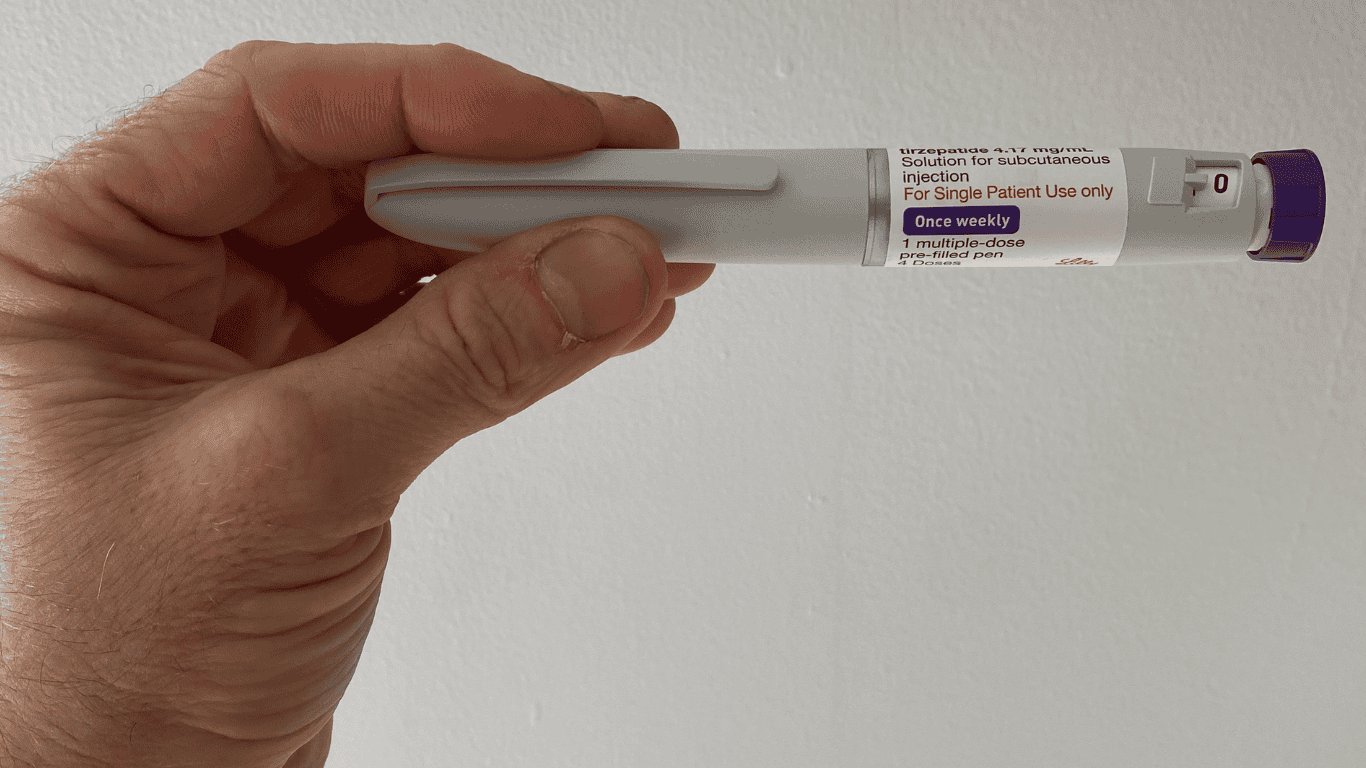
Over the last few years I’ve watched more and more of my clients start on GLP-1 medications. It started with Ozempic, and now Mounjaro has become the popular one. And honestly, the results I’m seeing are amazing — clients who’ve struggled with their weight for 15 years or more are finally losing it, sustainably.
Why It Actually Works
What I tell clients is this: the majority of what’s happening isn’t magic, it’s that you’re simply not eating as much — because the food noise is gone. No more constantly opening and closing the fridge to see what’s in there. For a lot of people, that background hum of “what am I going to eat next” has run their whole relationship with food for years. Take that away, and everything changes.
Where I See Clients Going Wrong
The mistake I see most often is clients not eating enough protein, and losing weight too quickly — because without meaning to, they’re starving themselves. They’re not setting themselves up properly for what a GLP-1 actually does to your body.
What’s really happening is they’re sledgehammering their diet — drastically cutting calories because their whole attitude and feelings toward food have shifted. Something as simple as sitting down for a family meal changes completely. What used to be a proper dinner at the table becomes sitting down and barely eating anything at all.
A Client Story
I’ve got a client I’m currently training who’s a great example of doing this the right way. She’s in her late 50s, has two kids, and has picked up a string of injuries over the years just from raising a family and staying active. She’s struggled with her weight for a long time and has had real success on Mounjaro — but she’s come into it with the right attitude, which we worked on together.
She’s taking collagen supplements, she’s eating more protein, and she’s still lifting weights to hold onto her muscle mass. She doesn’t want to end up 10 or 12 kilos lighter with no muscle definition to show for it. That’s the difference between losing weight and losing yourself in the process.
On collagen — there’s genuine research behind it, not just marketing. A study on older adults with age-related muscle loss found that those who combined collagen with resistance training gained significantly more muscle and strength than those who trained without it. There’s also decent evidence for joint stiffness and tendon support, and for skin elasticity — which matters when you’re losing a meaningful amount of weight. It’s not a miracle supplement, and more research is still needed, but combined with real protein intake and lifting, it’s a sensible addition, not a gimmick.
My Take: Why I’m in Favour of GLP-1s
I am genuinely in favour of clients using GLP-1s when the situation calls for it — and here’s the health argument, plainly.
If you’re 100+ kilos and fluctuating up and down by 4 or 5 kilos, that’s still 100+ kilos of load going through your joints, your cardiovascular system, and every other system in your body, every single day. Now say a GLP-1 brings you down to 60 kilos, and you’re fluctuating by that same 4 or 5 kilos. The fluctuation looks identical on paper — but the two situations aren’t remotely comparable. Carrying 40 fewer kilos, day in day out, is a fundamentally different — and far lower — load on your heart, your joints, and your long-term health, regardless of where you sit within that smaller range. It’s the sustained weight that matters to your health, not the size of the day-to-day wobble.
The Lightheadedness Problem
Something else I’ve noticed with clients on GLP-1s: they tend to get a bit lightheaded during training. That’s because their calorie intake has dropped significantly and their blood sugar is struggling to keep up with the demands of exercise. This is exactly why tracking and monitoring your nutrition properly matters so much on these medications — it’s the difference between training safely and setting yourself up for a bad session.
Menopause and GLP-1s
This one matters, especially for the women I train who are in their 40s and 50s. Menopause on its own accelerates bone loss as estrogen drops — and separately, losing weight (on a GLP-1 or otherwise) also reduces bone density. Put those two things together and you’ve got what researchers are now calling a “perfect storm”: roughly one in five women aged 50–64 are now on a GLP-1, and the combination of menopause and rapid weight loss puts real strain on bone health that’s worth taking seriously.
The good news is the same things I already push for with every client apply here too — resistance and weight training specifically (not just cardio) is one of the best tools for protecting bone density, alongside proper protein intake. If you’re starting a GLP-1 around menopause, it’s also worth asking your doctor about a baseline bone density scan before you begin, just so you’ve got a clear picture to track against.
None of this is a reason to avoid GLP-1s if they’re right for you — it’s a reason to make sure strength training and nutrition are part of the plan from day one, not an afterthought once something’s already gone wrong.
Whatever stage you’re at — starting a GLP-1, already on one, or just trying to figure out how to protect your muscle and strength through the process — that’s exactly what one-on-one coaching is built for. Ready to get your nutrition and training sorted properly? Reach out today.