
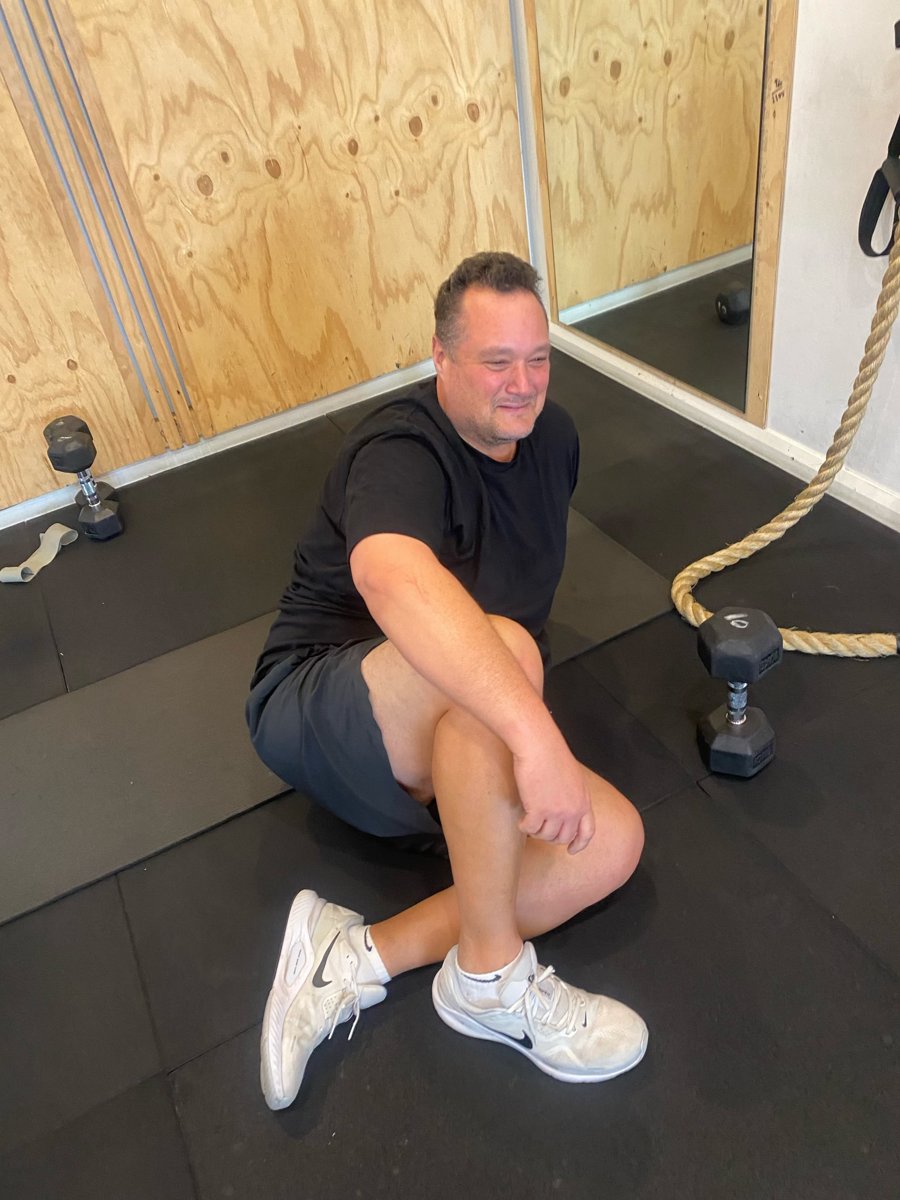
If you’re a bloke in your 40s and you’ve noticed your weight creeping up while your energy’s going the other way, you’re not imagining it — and cardio alone isn’t going to fix it.
Here’s what’s actually going on, and what to do about it.
What’s Actually Happening to Your Body After 40
Muscle loss — sarcopenia, if you want the technical term — doesn’t wait until you’re old. It can start as early as your 30s, and without something actively working against it, most men lose muscle mass gradually every decade from there. Less muscle means a lower resting metabolic rate, which is a big part of why the same eating and training habits that used to keep you lean stop working as well as they used to.
At the same time, testosterone declines gradually with age, which affects muscle-building capacity, energy, and recovery. Strength training is one of the few things that pushes back directly against both of these — it preserves and builds muscle, and resistance training itself supports healthy testosterone and growth hormone response in a way that steady-state cardio doesn’t.
None of this means you’re doomed to slow decline. It means the training approach that worked at 25 isn’t necessarily the one that keeps you strong at 45.
Why Cardio Alone Doesn’t Cut It
Cardio is good for your heart and it burns calories while you’re doing it. What it doesn’t do is build or protect muscle. If your only exercise is running or cycling, you can end up “skinny-fat” — lower weight on the scale, but not more muscle, not a faster metabolism, and no real protection against the bone density loss and joint issues that come with age.
Strength training does the opposite: it builds muscle, increases bone density, improves joint stability (which matters more the older you get), and — done properly — reduces your risk of the injuries that sideline men in their 40s and 50s for months at a time.
What a Real Program Actually Looks Like
The general research-backed guidance is resistance training two to three times a week, built around compound, multi-joint movements — squats, deadlifts, presses, rows — with progressive overload (gradually increasing weight or reps over time) rather than just showing up and lifting the same dumbbells you always have.
At The Fitness Space, a men’s over-40 strength program typically runs two to three sessions a week in my semi-private format — enough structure and accountability to build real momentum, without needing to be in five days a week to see results. Sessions are built around the same compound lifts — squats, deadlifts, presses, rows — with weight and reps progressed gradually as you’re ready, whether you’re picking training back up after years off or you’re already active and want it done properly.
The Non-Negotiables
A few things matter more after 40 than they did at 25:
Form comes before load. An extra 10kg on the bar isn’t worth a lower back or shoulder injury that puts you out for two months.
Protein intake needs to go up, not down, as you age — muscle repair and maintenance become less efficient, so the same protein intake that worked at 30 may not be enough at 45.
Recovery isn’t optional. Sleep, rest days, and not stacking hard sessions back-to-back all matter more as the body’s recovery capacity naturally declines with age.
If it’s been a while since you’ve trained — or ever — new clients go through a health screening as part of getting started, so your program is built around what your body can actually handle right now, not a guess.
A Local Note
If you’re in Maroubra or the surrounding Eastern Suburbs and you’ve been putting off doing anything about this — you’re not the only bloke thinking about it, and you don’t need to figure out sets, reps, and progression on your own.
One of my clients came in looking exhausted — overweight, no energy, the kind of tired that shows on your face. A year of consistent training later he’s leaner, noticeably stronger, and walks in most mornings a different person to who he was when he started. Turns out sorting out the basics outside the gym — sleep, especially — made just as much difference as the training itself. (More on that in my piece on sleep and recovery.)
Ready to Actually Do Something About It?
You don’t have to figure this out alone. Contact me and let’s build a program that actually fits where you’re at.