
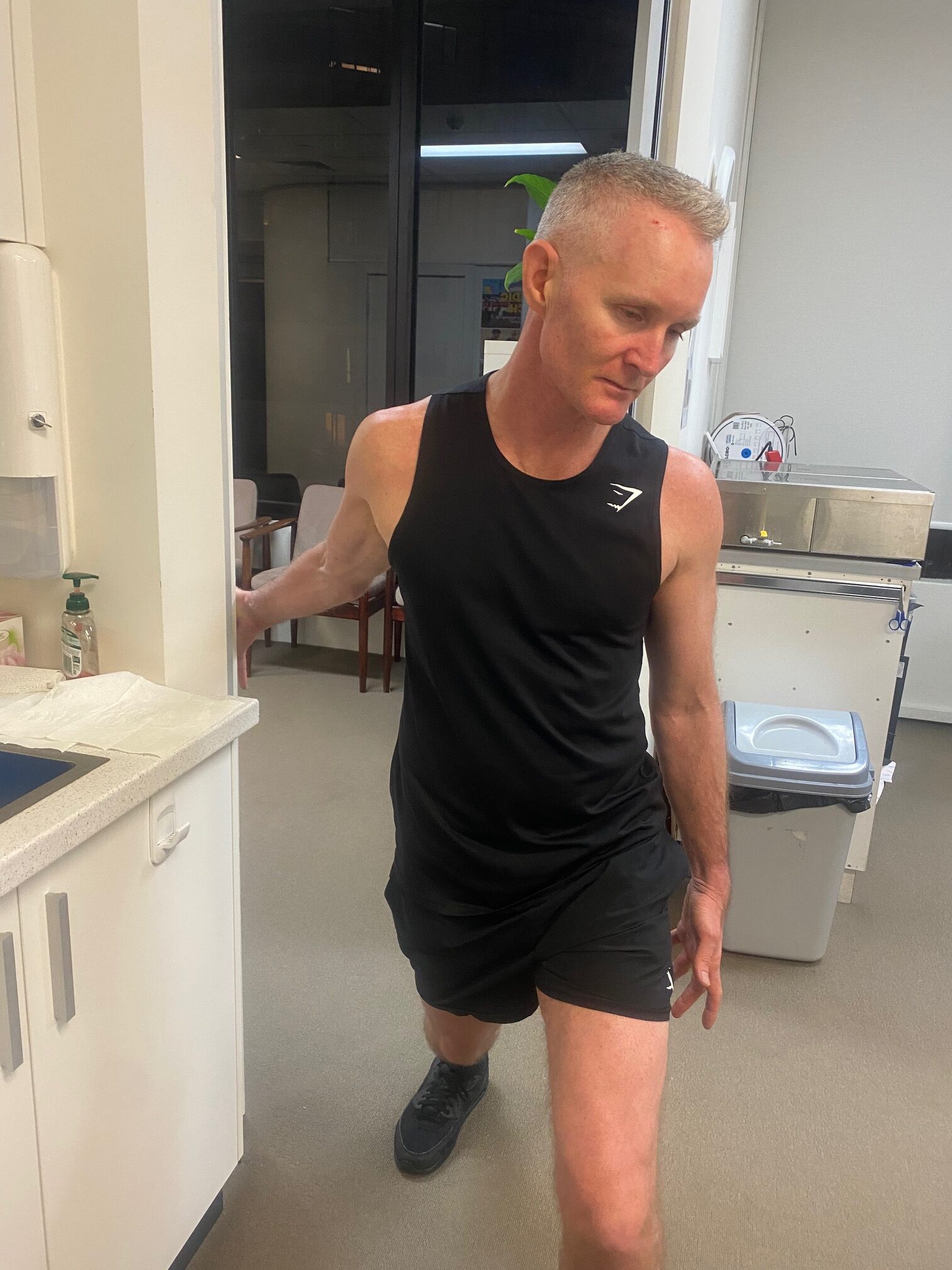
If you’ve been stretching the same tight shoulder for months and it still feels exactly the same, you’re not doing it wrong — stretching alone was probably never going to fix it.
Here’s the difference between stretching and mobility, and why it actually matters.
Stretching and Mobility Aren’t the Same Thing
Static stretching is holding a position passively — think reaching your arm across your chest and holding for 30 seconds. Mobility training is different: it’s moving actively through a range with strength and control, pausing, and returning with intention, rather than just parking yourself at the end of a stretch and waiting.
The problem is that holding a stretch doesn’t teach your body how to actually use that range during real movement. Passively stretching a tight shoulder doesn’t build the strength and control your shoulder blade needs to support pressing, reaching overhead, or lifting — it just shows your joint it can go there, without teaching it how to get there under control.
What the Research Actually Shows
This isn’t just theory. A clinical trial comparing two stretching approaches for people with shoulder pain found a clear pattern: the group that combined stretching with scapular stabilization — actively controlling the shoulder blade’s position during the movement — gained roughly 40 degrees of horizontal adduction range versus 8 degrees for stretching alone, and 48 degrees of internal rotation versus 26 degrees. Stretching by itself did improve range of motion to some degree, but it had a limited effect on actual pain.
The takeaway isn’t “stretching does nothing” — it’s that stretching without stability and control gets you a fraction of the result.
Why “Usable Range” Matters More Than Flexibility
You can have a shoulder that technically moves through a big range and still can’t press a weight overhead without it feeling unstable or sore. That’s because flexibility and usable range aren’t the same thing — usable range means your body can actually control and load the position, not just reach it.
That’s the real reason a “tight” shoulder often doesn’t improve no matter how much you stretch it: the limitation usually isn’t a lack of length in the muscle, it’s a lack of strength and control through that range. Training that combines mobility with light load fixes both at once instead of just chasing flexibility on its own.
A Better Approach for a Stiff or Achy Shoulder
Here’s how I actually build this into sessions: rather than one big mobility block bolted onto the start, it’s broken down into short periods spread out across the whole session — a couple of minutes here, a couple there — so the joint is being moved through a controlled range repeatedly, not just once before the “real” training starts.
And the mistake I see most often, by far, is clients who’ve only ever done static stretching for a stiff or achy shoulder. They’ve held the same stretch for months hoping it’ll eventually loosen up, and it hasn’t — because stretching alone was never going to build the control that shoulder actually needed.
This shows up worse the older a client is. If you’re 40 or beyond, I see restricted shoulders take longer to respond and need it programmed more deliberately than it does for someone younger — it’s not something that just works itself out with time.
When It’s More Than Mobility
Worth saying plainly: if a shoulder has real, ongoing pain — not just stiffness — that’s worth getting properly assessed by a physio before working around it in the gym. Mobility and strength work is genuinely effective for stiffness and restricted movement, but it’s not a substitute for a proper diagnosis if something’s actually injured.
A Local Note
I had a client who was permanently on his phone — from the moment he got out of his car in the morning to the moment he walked into the studio, head tilted forward, checking WhatsApp or emailing clients. His posture was rough, and it wasn’t just the phone: years at school, then university, then a career in the building industry spent in the office, on the phone, in compromised positions at a laptop, with basically no mobility or strength training in the mix. A sore shoulder was more or less inevitable.
We incorporated shoulder mobility work into his weight training program, and after three to six months there was a genuinely significant difference in how he could move that shoulder — not from stretching it more, but from building real strength and control through the range it had been missing.
Ready to Actually Fix It Instead of Just Stretching It?
If a stiff or achy shoulder has been hanging around longer than it should, connect with me today — let’s actually get to the bottom of it.