
If you’ve been told you have low bone density, you’ve probably also been told to be careful. Don’t lift anything heavy. Stick to walking. Maybe some light weights.
It sounds sensible. It’s also, according to the best Australian research on the subject, the wrong advice for most people.
Most of the clients I train now are in their 50s, and they’re not scared of weight training. They know it’s good for their health. But I still hear the “be careful” line often enough that it’s worth looking at what the research actually says.
The Study That Changed the Advice
Researchers at Griffith University in Queensland ran a trial called LIFTMOR. They took 101 post-menopausal women, average age 65, all with low bone density, and split them into two groups.
One group did a gentle home exercise program. The other did something that would have made a lot of doctors nervous: two supervised 30-minute sessions a week of heavy lifting. Deadlifts, squats and overhead presses at over 85 per cent of the most they could lift, five sets of five reps, plus a jumping and landing exercise for impact. For eight months.
Here’s what happened. The heavy-lifting group’s spine bone density went up by nearly three per cent. The gentle-exercise group’s went down by more than one per cent. At the hip, the lifters held steady while the gentle group lost almost two per cent. The lifters also got stronger, faster out of a chair and better at every functional test.
And the safety question? One woman in the lifting group had a minor lower-back spasm and missed two sessions. That was it. The researchers concluded there were no adverse events under properly supervised conditions.
Why Heavy Works and Gentle Doesn’t
Bone only gets stronger when you put real load through it. Walking and swimming are good for your heart, but they don’t ask much of your skeleton. Light weights are better than nothing, but the signal is weak.
Heavy, slow, well-supervised lifting through the hips and spine is what tells your body to lay down new bone. That’s why Healthy Bones Australia now recommends progressive resistance training at a hard effort, two to three sets of five to eight reps, using movements like weighted squats, lunges and deadlifts, alongside some impact work and regular balance practice.
The Word That Matters: Supervised
This is not a green light to walk into a gym and load up a bar. The women in that trial were coached, every rep, for eight months. They started light and built up. Technique came first.
Healthy Bones Australia says the same: high-intensity resistance training needs supervision because of the fracture risk, and some people need modifications, such as anyone with a recent fracture, arthritis, a shoulder injury or a heart or lung condition. If you’ve been diagnosed with osteopenia or osteoporosis, get the OK from your GP or specialist first, then find someone who knows how to coach this properly.
How I Approach It in the Studio
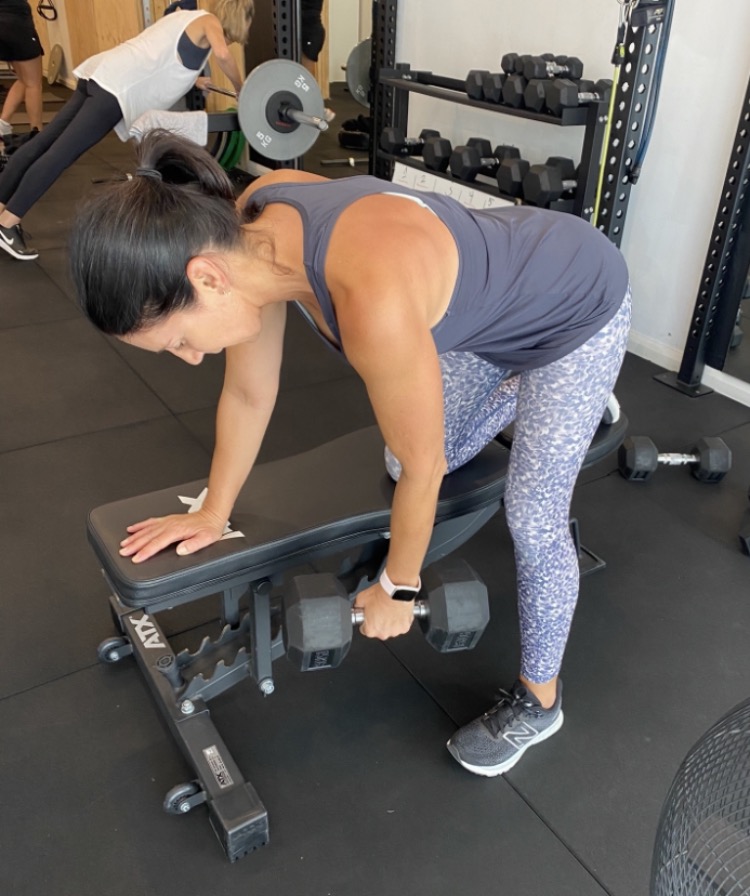
How I start someone depends on whether they’ve lifted weights before. Either way, I explain that they’ll start on the lighter side of the weight rack. As they get stronger, over weeks, months and even years, they progress up into heavier weights. There will always be a limit on how heavy someone can lift, and I work within it.
The client I wrote about in my bone health guide is the proof. Her doctor told her, years ago, to start weight training. She had a bone density test before she began, and another 12 to 14 months later. Her bone density markers had improved by 10 per cent.
Don’t Let Fear Keep You Weak
The worst outcome for low bone density isn’t a sore back from lifting. It’s a hip fracture from a fall you were too weak to catch. Done properly, heavy lifting is one of the few things proven to turn bone density around, and it builds the strength and balance that keep you on your feet.
If you want the full picture on bone health and what a program looks like, read my guide to weight training for bone health. And if you’d like to be coached through it safely, connect with me today.