
“Breakfast is the most important meal of the day.” You’ve heard it a thousand times. But is it true? And if you do eat breakfast, what should be on the plate? Here’s how I see it after training clients in Maroubra.
Does breakfast actually matter?
It depends on what you’re trying to do. I don’t always tell clients breakfast is the most important meal, because for some people it isn’t.
If a client is in a calorie deficit to lose weight, I explain it like a budget. Say you have $1,500 to spend today. Does it matter whether you spend it at breakfast, lunch or dinner? At the end of the day you’ve still spent $1,500. Calories work the same way. If your budget is 1,500 calories, what matters most is that the total over the day lands where it should. When you spend them is mostly up to you.
The research backs that up. A 2019 review in the BMJ pooled 13 trials and found that adding breakfast didn’t help people lose weight. People who ate breakfast ended up eating more calories across the day, and the studies were mostly short and low quality, so it’s far from the last word. Another review found that how many meals you eat doesn’t change body composition when total calories are the same.
So if you’re not hungry in the morning, or all you want is a coffee, that’s fine. Not everyone has an appetite first thing, and you don’t have to force it.
But if you do eat breakfast, make it count
Here’s where protein comes in. Most of us eat our protein at dinner and very little at breakfast. If you’re trying to build or keep muscle, getting enough protein across the day matters, and breakfast is often where the gap is. I cover how much you need in my post on how much protein you need after 40.
Protein also tends to keep you fuller. In one small UK trial of older adults, a very high-protein breakfast drink lowered appetite more than a lower-protein one. That was only a short-term effect in 48 people, so don’t treat it as magic. But it’s a good reason to move your breakfast away from cereal, toast or muesli, which is what most of my clients eat, and towards something with more protein in it.
My go-to breakfasts
A green smoothie is what I have most days: spinach, almond milk, protein powder and a banana. It takes a couple of minutes to make and you can drink it on the way out the door.
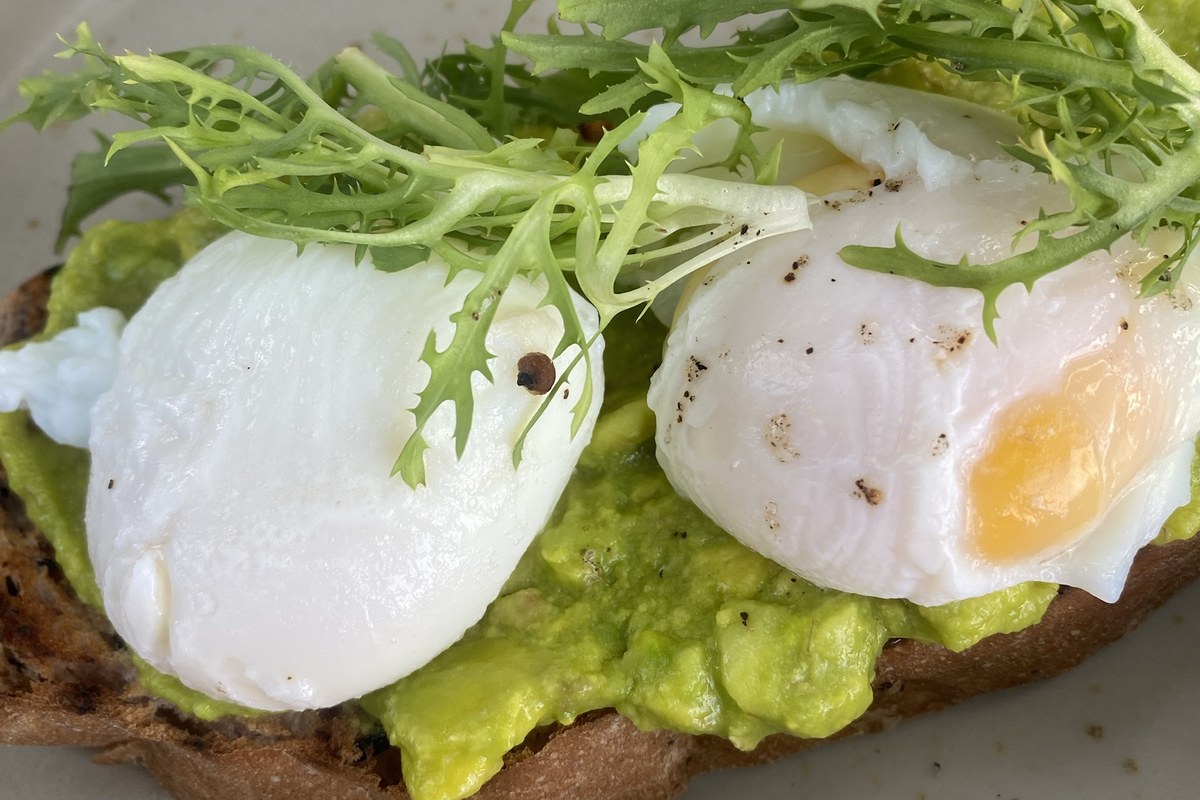
Eggs and sourdough are my other staple. You can vary the eggs however you like. It’s quick, filling, and easy to get right.
That’s it. No special tricks. The best high-protein breakfast is one you’ll actually make on a busy morning.
The bottom line
Breakfast isn’t magic, and you don’t need to eat it to lose weight. What matters most is your total calories and total protein across the day. If you eat in the morning, make it protein-rich. If you don’t, that’s fine too.
Not sure what’s right for your goal? Come and talk to me. I train people in small groups of up to six here in Maroubra, and I’ll help you work out what suits you.
Sources
- Sievert K et al. Effect of breakfast on weight and energy intake: systematic review and meta-analysis of randomised controlled trials. BMJ, 2019;364:l42.
- Schoenfeld BJ, Aragon AA, Krieger JW. Effects of meal frequency on weight loss and body composition: a meta-analysis. Nutr Rev, 2015;73(2):69-82.
- Randomised crossover trial of high-protein breakfast drinks and appetite in healthy older adults. Geriatrics, 2022.
Related reading: meal planning tips for busy families and 5 summer fitness tips from a Maroubra personal trainer and plant-based meat and protein and protein powder: is it worth it.