
Nearly everyone gets a sore lower back at some point. The question I get asked is always the same: should I train through it, or rest until it’s gone?
The honest answer is that it depends, and I’m a trainer, not a physio or a doctor. But the research on this is clearer than most people think, and it’s not what your instincts tell you.
The Research: Rest Is Usually the Wrong Call
A major review in The Lancet, one of the world’s top medical journals, looked at how low back pain is treated around the world. Its conclusions were blunt. Lower back pain is the leading cause of disability worldwide, and a lot of the treatment people get makes things worse, not better.
Bed rest is the big one. Lying low to let your back settle feels sensible, but the evidence says it prolongs the problem. The review’s advice is to stay as active as you can and to start moving and exercising soon after the pain begins. As one of the authors put it, the spine needs movement. Most new episodes of back pain settle down on their own with the right kind of activity.
Australian GPs follow the same line. The Royal Australian College of General Practitioners’ handbook tells doctors to advise people with a new bout of back pain to stay active rather than rest in bed.
When to Stop and See Someone
Staying active doesn’t mean ignoring warning signs. See a doctor straight away if your back pain comes with any of these: numbness around your groin or backside, trouble controlling your bladder or bowel, weakness in your legs, a fever, pain that started after a fall or accident, or unexplained weight loss.
You should also get it looked at if the pain is severe, keeps getting worse, isn’t settling after a few weeks, or is stopping you from working or sleeping. A good physio is worth their weight in gold here, and I’d rather send a client to one early than guess.
How I Handle It in the Studio
For most of the clients I see, back pain isn’t a one-off. It’s an ongoing thing: a bit of chronic back pain they’ve had for years, often from sitting down too much, or from something they did in their younger days. So it’s less about whether we can train and more about managing the back, whether it’s playing up right now or it’s a long-term niggle. We can always train.
I focus on what that client needs on the day. Sometimes a bit of release work with a massage ball, or stretching out through the SI joint, where your spine meets your pelvis, helps enormously before we get into the session.
The clients I train are already pretty cautious. They listen to what their bodies are telling them. But if I think someone hasn’t made getting it looked at a priority, I’ll keep on at them until it is. It’s far better to sort the issue out at the start than to let it turn into something bigger down the track.
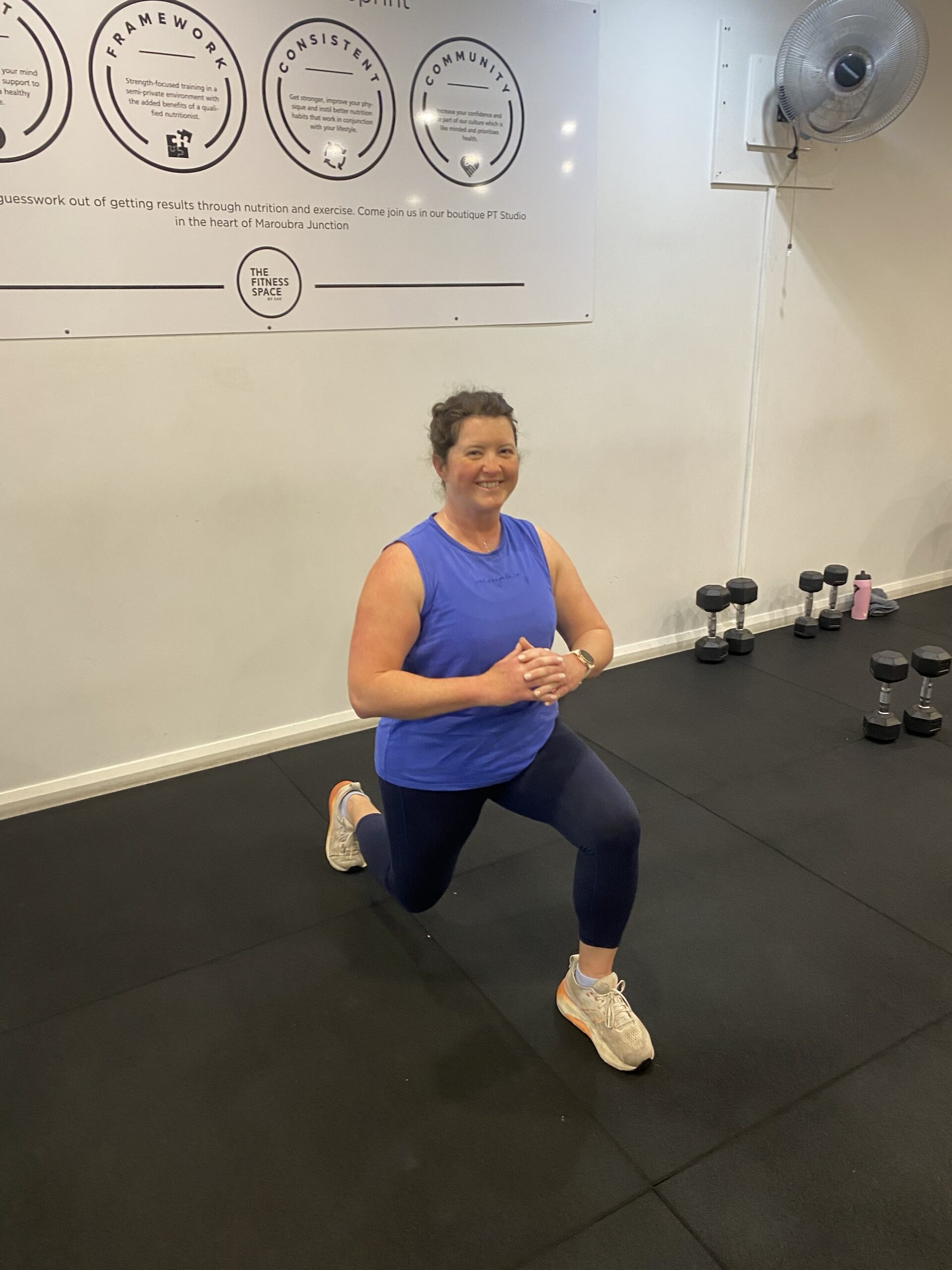
One client I still train had terrible chronic back pain for many years. She trained with me twice a week, consistently, then had to stop for three or four months after she did something that aggravated it. When she felt ready to come back, I rebuilt her program around her physio’s recommendations and what I felt she needed. Two years on, there’s been no looking back. She’s back to full training, full deadlifts and full squats, she moves better, and she’s managing her pain.
The Goal: Keep the Habit, Lose the Fear
A sore back doesn’t have to mean weeks off. In most cases, the best thing you can do is keep moving in a way that doesn’t flare it up, let it settle, and get back to normal training gradually. The people who do worst are usually the ones who stop everything and get scared of their own back.
If you’ve had time off and you’re not sure how to get going again, my post on returning to exercise after time off will help. And if you’d like someone to coach you through it properly, working alongside your physio or GP, connect with me today.