
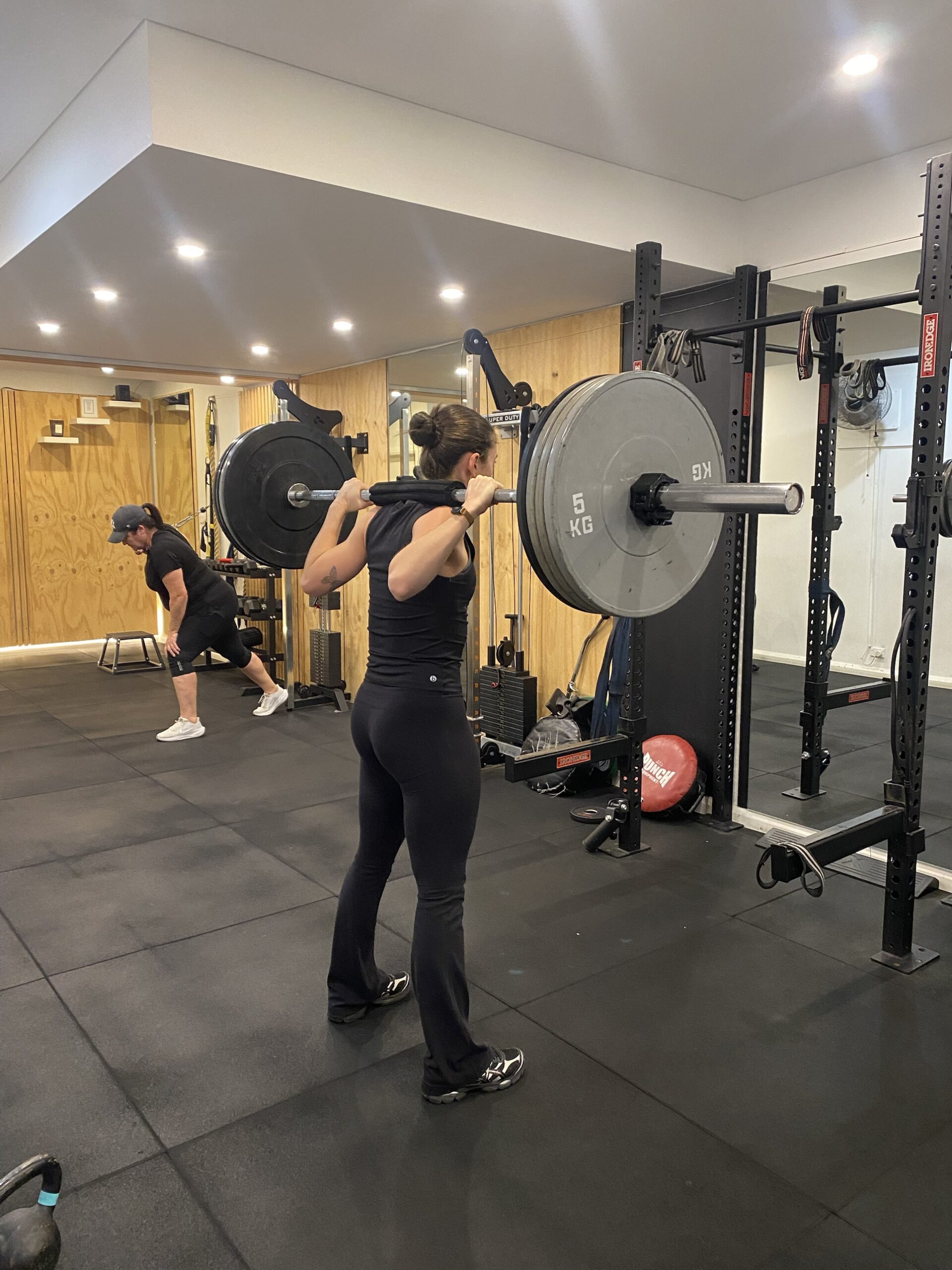
If your knees hurt when you squat, there’s a good chance someone has told you to stop squatting. Or to never let your knees go past your toes. Or that squats are “bad for your knees”.
Most of that is wrong, and the research on it is clearer than the advice you’ll get at a barbecue. I’m a trainer, not a physio or a doctor, so this isn’t a diagnosis. But here’s what the evidence says, and how I handle it in the studio.
First, the Myth: Knees Past Your Toes
The “knees behind the toes” rule has been around for decades. Researchers tested it by having people squat with their knees deliberately held back. The stress on the knee did drop, by about 22 per cent. But the stress on the hips and lower back went up more than tenfold.
In other words, the rule doesn’t make squatting safer. It moves the load somewhere else. Your knees are built to travel forward when you squat. What matters is that they track in line with your feet, not that they stay behind an imaginary line.
What Actually Changes Knee Stress: Depth and Load
A study of women doing back squats measured the stress on the kneecap joint at different depths, weights and stance widths. Two things stood out. Stress went up as the weight went up, at every depth. And changing stance width made no meaningful difference.
So if your knees complain, the levers are how heavy you’re going and how deep you’re going, not your foot position. Dropping the load, changing the depth, or using a version of the squat that suits your knees today is usually enough to keep training.
Sore Knees Are Not a Reason to Stop Moving
If your knee pain is the wear-and-tear kind, the Australian GPs’ guideline for knee osteoarthritis is firm: muscle-strengthening exercise is strongly recommended, and regular exercise matters for both pain and function. Losing weight helps too, if you’re carrying extra. Keyhole surgery to “clean out” the knee is specifically not recommended unless the knee is locking.
Strong legs protect sore knees. That’s the whole reason not to give up on squatting. You just have to squat in a way your knees can handle right now.
When to See Someone
See a GP or physio if your knee is swollen, locks, gives way, or if the pain came on after a twist or a fall. The same goes for pain that’s getting worse or hasn’t settled after a few weeks of sensible changes. A physio can tell you what’s going on in a way I can’t, and I’d rather work alongside one than guess.
How I Handle It in the Studio
My rule is simple. If your knees are sore, we don’t squat that day. Instead, we might do isometric holds against the wall, where you sit into a squat position with your back on the wall and hold it. You still work the legs, without the knee bending under load.
I’ve noticed that most clients are slow to organise a physio appointment unless it becomes urgent. So we try other things first: massage, mobility work and strengthening the glutes, and we see whether that settles it.
That said, it’s better to get a diagnosis early on. Once you know what’s actually going on in the knee, we can focus the strengthening on exactly what the squat needs, instead of guessing.
Keep Squatting, Just Differently
Sore knees are a signal to change something, not to stop. Drop the weight, adjust the depth, pick a version your knees are happy with, and keep building strength around the joint. If you’d like help working that out, working alongside your physio or GP if you have one, connect with me today.
If you’re over 50 and wondering what else keeps you strong and steady, my post on functional strength after 50 covers balance and everyday strength.