
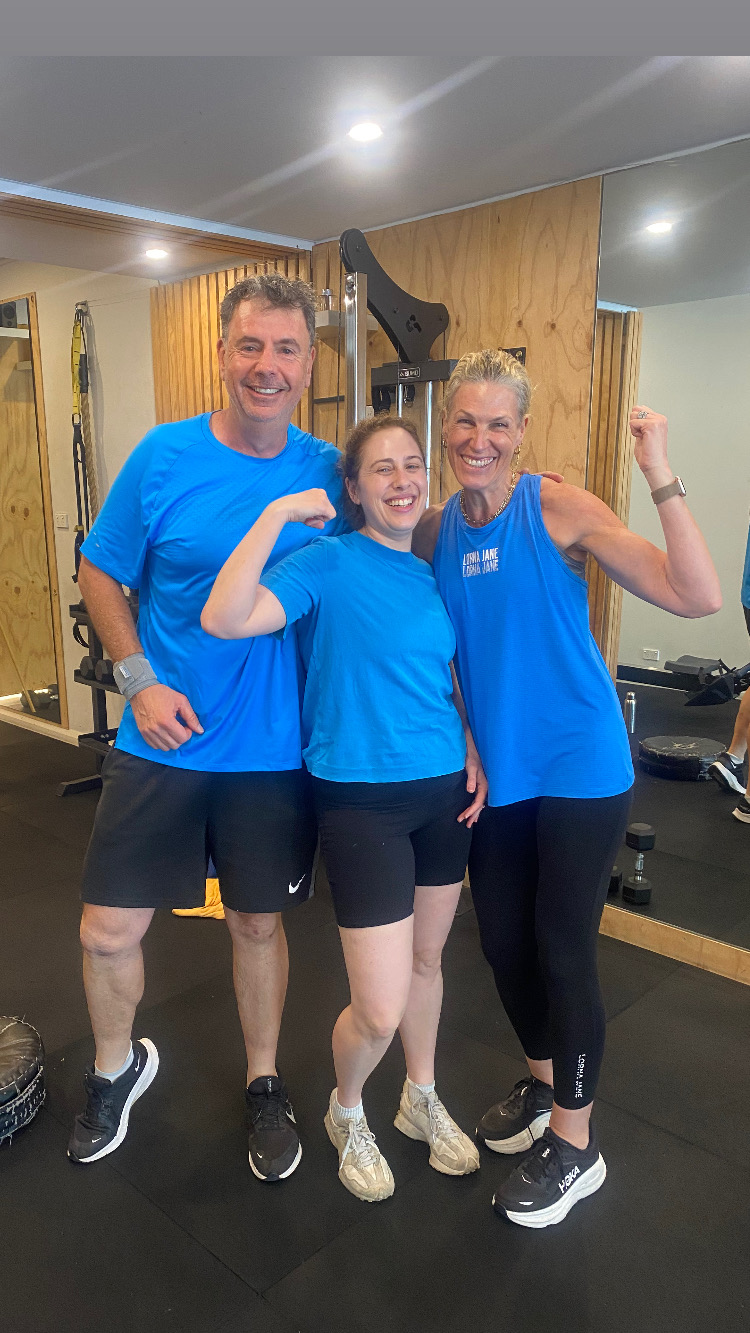
At the studio, you can train one-on-one with me, or in a small group of no more than six. People ask which is better. The honest answer is that it depends on you, not on the format.
Here’s what each one is good at, what the research says about coaching, and who I’d point to which.
What the Research Says About Being Coached
First, the thing both options share: someone watching you.
A study in Medicine & Science in Sports & Exercise put two groups of gym-goers on exactly the same 12-week program. One group was supervised by a trainer every session. The other was given the program and left to it. The supervised group got noticeably stronger: their squat went up 33 per cent compared with 25, and their bench press 22 per cent compared with 15. They lifted heavier, progressed faster and tolerated more work, because someone was there to push and correct them.
It was a small study of young men, so don’t take the exact numbers to the bank. But the message holds in my studio every week: being coached beats following a plan on your own. Whether that coaching happens one-on-one or in a small group is the next question.
What One-on-One Does Best
Personal training is the whole hour on you. Every rep is watched, every exercise is picked for your body and your goal, and the session changes on the spot if something isn’t right.
That matters most when you’re working around something: an injury, a diagnosis, a doctor’s or physio’s plan, a goal with a deadline, or a long time away from training. It’s also the best fit if you’d rather not have anyone else in the room while you find your feet.
What Small Group Does Best
Small group training gets you the coaching at a fraction of the cost, and it adds something one-on-one can’t: other people.
Research into why older adults keep showing up to group exercise found that the social side, the instructor and the feeling of belonging were central to whether people stuck with it. That’s what I see too. The group becomes the reason you turn up on the days you don’t feel like it, and the friendships that form in the studio are real.
The catch is that a group only works if it’s small enough to coach. At six or fewer, I can still see every rep. Much bigger than that and it stops being personal training with company and becomes a class.
How I Keep Group Sessions Personal
In a group I’m focused on attention to detail. I make sure everyone is doing the exercises correctly, every set. It makes my job a lot easier when everyone in the room is following the same cues, and it means you get the same quality of coaching you’d get on your own, at a fraction of the price.
Who I’d Point to Which
I only steer people towards one-on-one in a few situations. The first is simply whether they can afford it long term. Beyond that, it’s for people who are starting completely fresh, who’ve never exercised before, even in their late 40s and 50s. It’s for people carrying an injury. And it’s for clients who are pregnant. In each case they need that little bit of extra, special help.
For most people, small group training is the affordable option. You get the same quality training at a fraction of the price. It tends to suit people who have trained before, so they’ve already adapted and understand the basics.
I’ve had clients who did personal training with me for many years, then retired, changed jobs, or just felt they needed to mix up their training. They’ve jumped into the small group and, because it’s more community-based and social, they’re loving it just as much. And they still get the same expertise from me.
Still Not Sure?
Most people don’t have to choose for life. Plenty start one-on-one to build confidence and technique, then move into a group once they’re comfortable. Others do the reverse when they want to chase a specific goal.
If you’re brand new to training and nervous about walking into a gym, my post on how to walk into a gym with confidence explains what your first session looks like. And if you’d like to talk through which option fits you, connect with me today.
Related reading: personal training in the Eastern Suburbs and why I cap small group training at six.